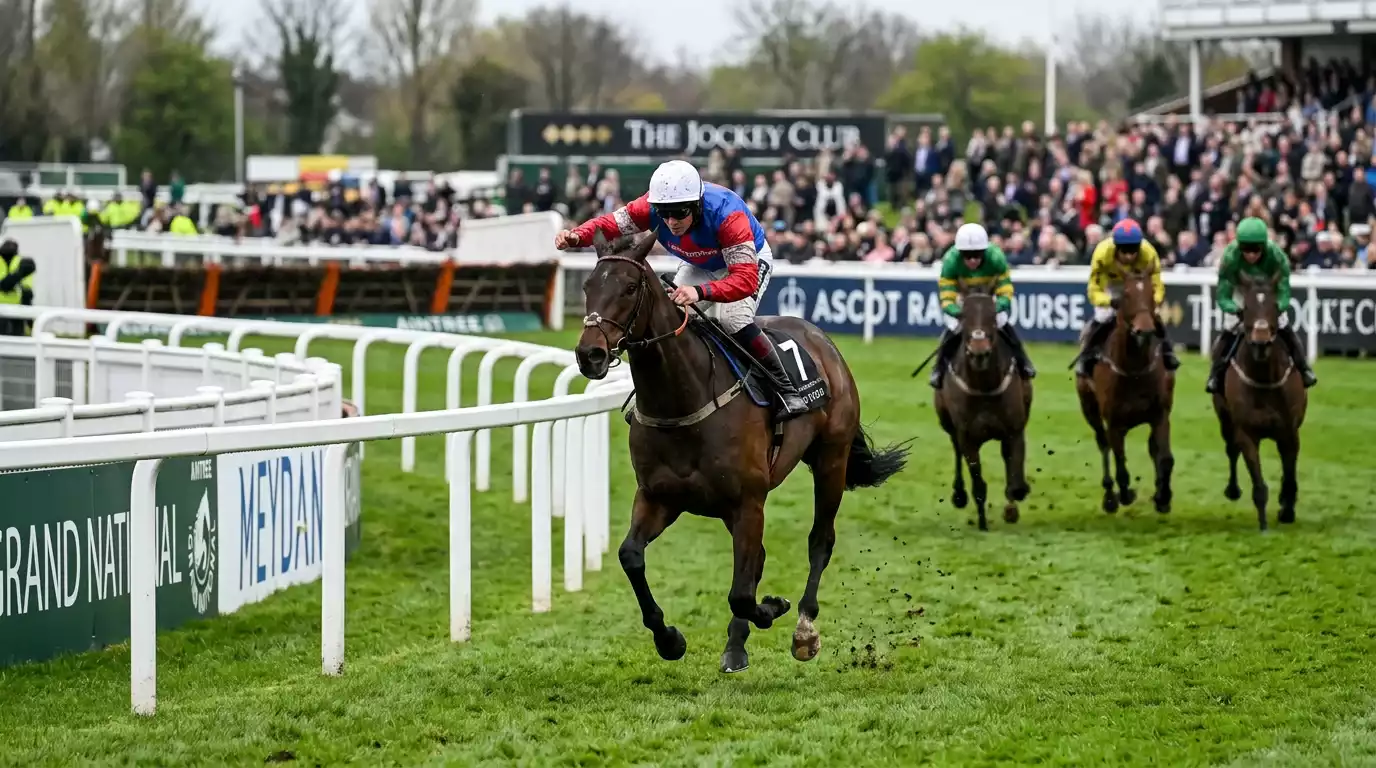
How Place Betting Shapes the UK Racing Market
 Available in US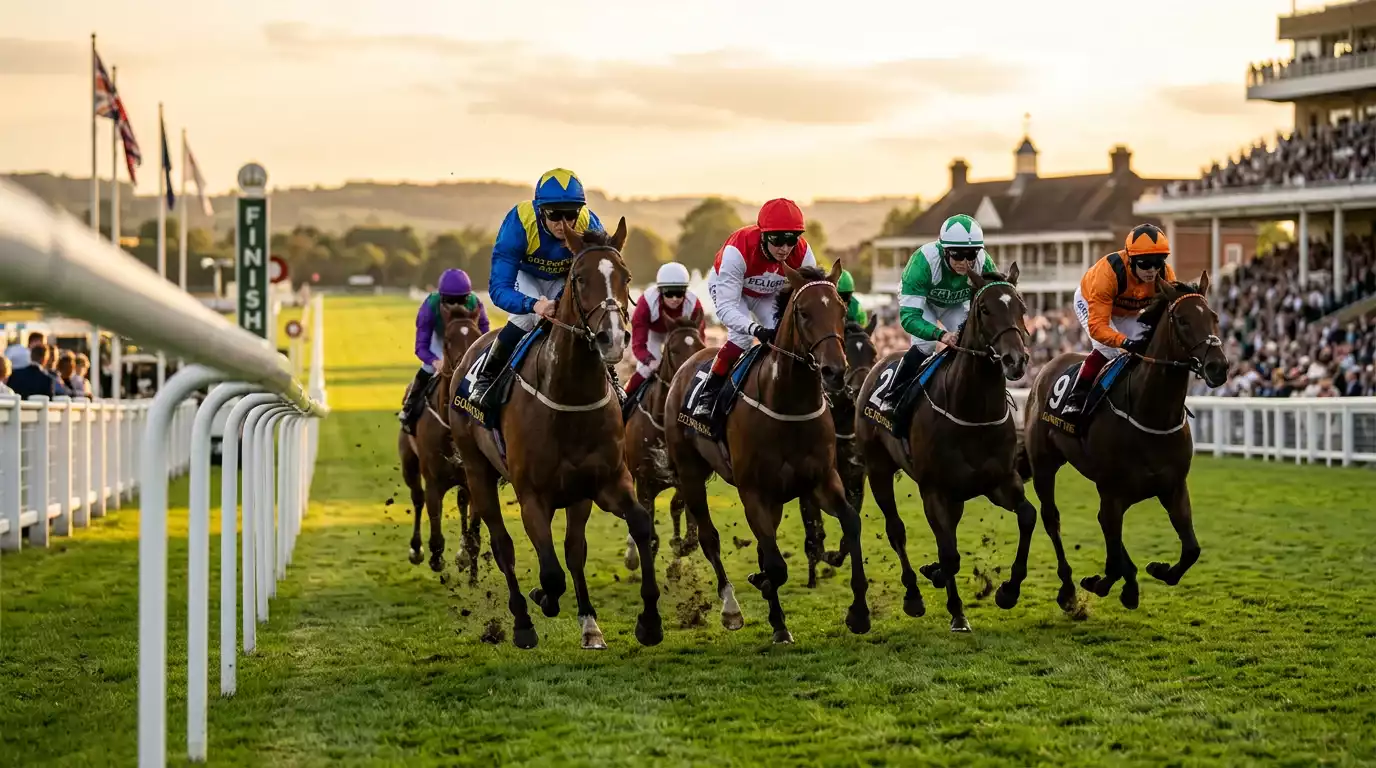
Place bet — a wager on a horse to finish within a specified number of top positions in a race, rather than to win outright. In UK racing, the number of qualifying places and the fraction of win odds paid out are governed by field size, race type and the terms set by Tattersalls Committee rules.
Nine years of studying place markets has taught me one thing above all else: the place bet is the most misunderstood wager in British racing. Not because the concept is complicated — your horse finishes in the places, you get paid — but because almost nobody treats it with the analytical rigour it deserves. Most guides online will tell you it is a “safer” or “beginner-friendly” bet and leave it at that, as if lower risk is the whole story. That is like calling a scalpel a “safer knife” and walking away.
The reality is far more interesting. Place betting sits at the heart of a sport that contributes over £4 billion to the UK economy annually and supports around 85,000 jobs. Remote betting on horse racing alone generated £766.7 million in gross gambling yield in the year to March 2025, making it the second-largest betting sport behind football. Those numbers are not background noise — they shape the odds you see on screen, the promotions bookmakers offer, and the long-term viability of the place markets you bet into every Saturday afternoon.
I have spent the better part of a decade breaking down place market mechanics for punters who want more than surface-level advice. This guide is the result: a complete framework for understanding UK place bets, from the rules governing how many positions pay out to the data-driven strategies that separate informed bettors from hopeful ones. Every claim here is anchored to primary sources — the British Horseracing Authority, the Gambling Commission, the Horserace Betting Levy Board — because opinions are cheap and data is not.
Whether you are placing your first place bet or your ten-thousandth, what follows will change how you think about this market. That is not a promise I make lightly.
- The Five Numbers That Define UK Place Betting Right Now
- How a Place Bet Works: Mechanics Step by Step
- UK Place Terms at a Glance: Runners, Places and Fractions
- Calculating Your Place Bet Payout: Worked Examples
- Why Field Size Decides Your Place Bet Value
- UK Racing's £4 Billion Economy and What It Means for Bettors
- Affordability Checks, the Black Market and Place Betting
- Data-Driven Place Bet Strategy: Core Principles
- Bookmaker Place Terms: What Varies in 2026
- Place Bet Horse Racing FAQ
The Five Numbers That Define UK Place Betting Right Now
- UK place terms are governed by field size: 2-4 runners pay two places, 5-15 pay three, and 16+ runner handicaps pay four — with fractions of 1/4 or 1/5 determining your payout.
- Average field sizes of 8.90 (Flat) and 7.84 (Jumps) mean most races sit near the three-place threshold, making every late withdrawal significant.
- Remote betting on racing generated £766.7 million in gross gambling yield in the year to March 2025 — the market is large, liquid and worth understanding.
- Favourite strike rates drop from above 50% on good ground to around 20% on heavy, creating the biggest place bet value shifts of the season.
- Place bet strategy starts with two checks — field size and going — before any form analysis. Get those right and the rest follows.
How a Place Bet Works: Mechanics Step by Step
A few years back, I watched a friend lose a perfectly good Saturday because he placed a bet on a horse at 12/1 in a five-runner race — and celebrated when it finished second. He thought he had won. He had not. Five runners meant only two paid places, and his horse needed to finish first or second. It did finish second. But in a five-runner field, the place fraction was 1/4 of the win odds, and his payout was a fraction of what he expected. The look on his face when I walked him through the maths is something I still think about when writing guides like this one.
Field — the total number of runners declared to start a race. This number determines how many finishing positions qualify as “places” and is the single most important variable in any place bet.
Place — a finishing position that qualifies for a payout under the applicable place terms. In UK racing, this can mean the top two, three or four finishers depending on the field size and race type.
Fraction — the portion of the win odds used to calculate place bet payouts. UK standard fractions are 1/4 or 1/5 of the win odds, depending on the race type and number of runners.
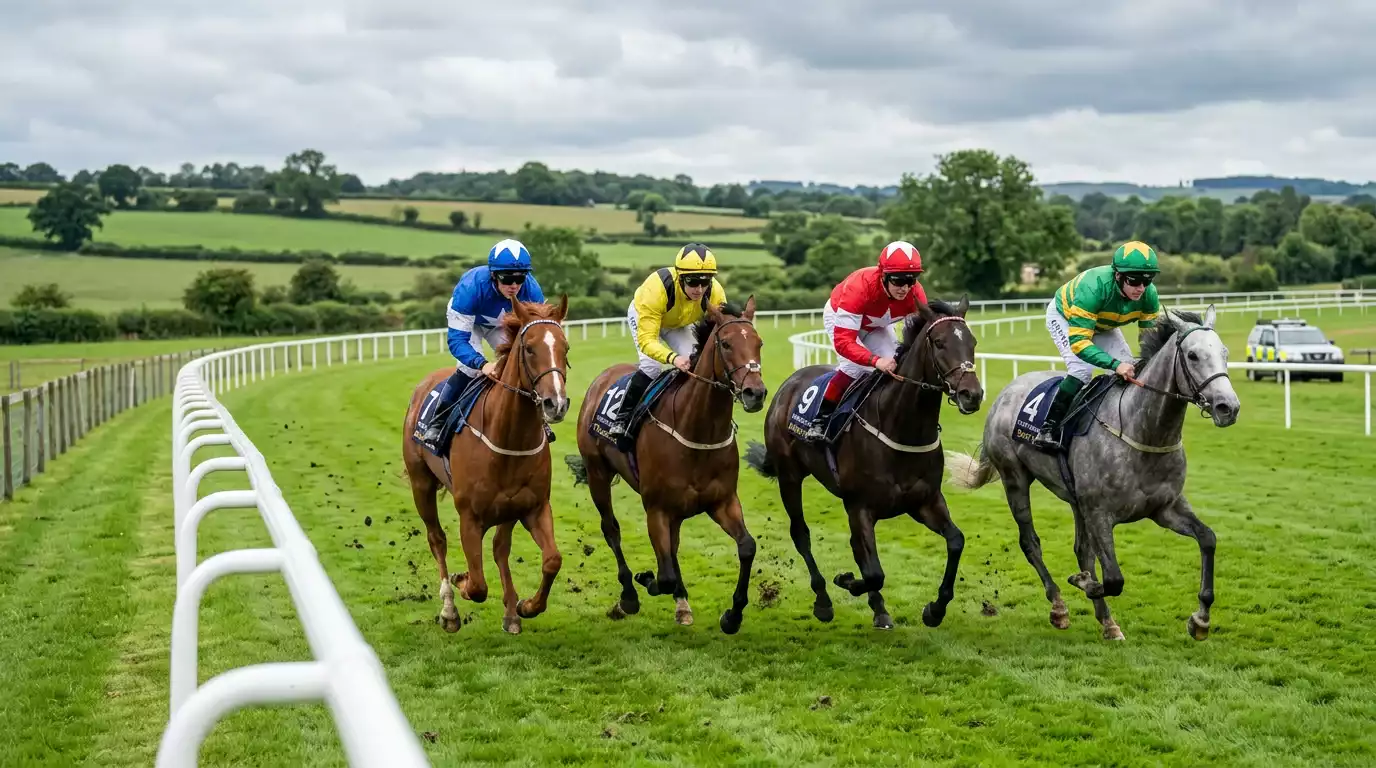
The mechanics work like this. You select a horse. Instead of backing it to win, you back it to place — meaning it needs to finish within a certain number of positions from the front. If the race has eight or more runners in a non-handicap, three places are paid. If it has 16 or more runners in a handicap, four places are paid. Fewer than five runners? Only the first and second count. These thresholds are not arbitrary; they derive from Tattersalls Committee rules that have governed British betting for over a century.
Your payout is calculated by taking the win odds and multiplying them by the applicable fraction. A horse priced at 10/1 in a race paying 1/4 odds gives you place odds of 10/4, which is 2.5/1. Stake £10 on that, your horse places, and you collect £35 — your £10 stake plus £25 profit. Simple arithmetic, but the variables that feed into it — field size, race type, handicap status — create a system with far more depth than most punters realise.
The average field size in UK racing tells you something crucial about what most place bets actually look like in practice. The typical race sits right around the threshold where three places are paid — not four. Every runner above or below that threshold shifts the probability landscape for your bet, and most punters never check.
Quick reference: place bet payout formula
Place odds = Win odds x Place fraction
Payout = Stake x (Place odds + 1)
Example: £10 at 8/1, fraction 1/4
Place odds = 8/1 x 1/4 = 2/1
Payout = £10 x (2 + 1) = £30
One detail that catches even experienced punters off guard: the place terms you see when you put your bet on are not always the terms your bet settles at. If runners withdraw between the time you place your bet and the off, the field size drops, and the number of paid places can change with it. A 16-runner handicap that loses two runners before the off becomes a 14-runner handicap — and your four-place terms shrink to three. I have seen this happen at Cheltenham more than once, and the lesson it teaches is worth repeating: always check the final field before the off, not just the overnight declarations.
UK Place Terms at a Glance: Runners, Places and Fractions
I keep a laminated card in my wallet — yes, genuinely laminated — with the standard UK place terms printed on it. I started carrying it after a day at Newbury where I misremembered the handicap threshold and put money on a fourth-place finish in a 14-runner race. That card has paid for itself a hundred times over, and what follows is essentially its contents in expanded form.
2-4 runners
Places paid: 1st and 2nd only (some bookmakers pay 1st only with 2-3 runners). Fraction: 1/4 of win odds.
5-7 runners
Places paid: 1st, 2nd, 3rd. Fraction: 1/4 of win odds.
8-15 runners (non-handicap)
Places paid: 1st, 2nd, 3rd. Fraction: 1/5 of win odds.
8-15 runners (handicap)
Places paid: 1st, 2nd, 3rd. Fraction: 1/4 of win odds.
16+ runners (handicap)
Places paid: 1st, 2nd, 3rd, 4th. Fraction: 1/4 of win odds.
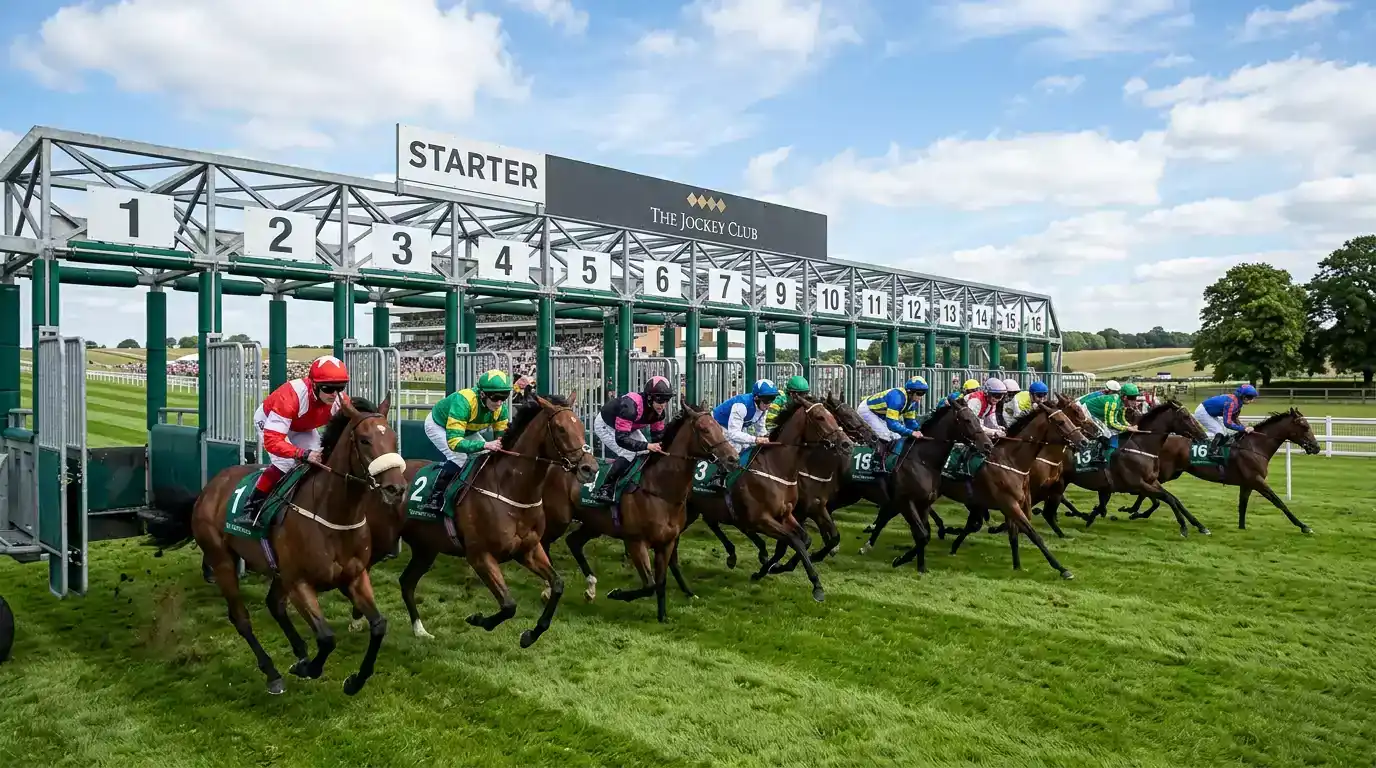
The distinction between handicap and non-handicap races is where most confusion lives. In a non-handicap with eight or more runners, the fraction drops to 1/5 — meaning your place payout is smaller relative to the win price. Handicaps at the same field size still pay 1/4. This is not a minor difference. On a 10/1 shot, the gap between 1/4 (place odds 2.5/1) and 1/5 (place odds 2/1) is 50p for every pound of profit. Over a season of betting, that gap compounds into serious money.
The 16-runner handicap threshold is where place bettors find the most value. A fourth qualifying position fundamentally changes the mathematics of the bet — you are now covering roughly 25% of the field instead of less than 20%. With average Flat field sizes sitting at 8.90 runners, these larger fields are not as rare as you might think. Big Saturday handicaps at York, Ascot and Newmarket regularly cross that line, and during the major festivals the fields swell further still. For a full breakdown of every rule, exception and edge case, the complete UK place terms table covers the territory in detail.
Place Bet vs Win Bet: Risk, Odds and When Each Pays
Win bet
Your horse must finish first. Full win odds paid. Higher risk, higher reward. In large fields, favourites win roughly 33% of the time — meaning two out of three win bets on the favourite lose.
Place bet
Your horse must finish within the paid positions (typically top 2, 3 or 4). A fraction of win odds is paid. Lower risk per bet, lower return per winner. The same favourite that wins 33% of the time in large fields will place far more often — sometimes above 60%.
The trade-off seems obvious: place bets sacrifice upside for reliability. But that framing misses the point. The question is not “which pays more per winner” — it is “which generates better returns over 100 bets given my selection process.” A punter who can identify horses that place at a higher rate than the odds imply will grind out profit on place bets that a win-only strategy cannot match. Favourites demonstrate this clearly. They win only about 33% of the time in larger fields, yet their place strike rate on good ground can exceed 50%. The reduced odds compensate for lower variance, but the edge — if it exists — comes from finding horses whose true place probability exceeds what the market prices in.
That said, place betting on short-priced favourites is a trap I see punters fall into constantly. A 1/3 favourite with place odds of roughly 1/12 needs to place in 92% of its races just to break even. Even the most reliable horse in training does not hit that mark consistently across a full season. The maths demands selectivity, and I will return to this point in the strategy section below.
Where Each-Way Fits: The Place Half Explained
An each-way bet is not a single bet — it is two bets of equal stake. One on your horse to win, one on your horse to place. If your horse wins, both parts pay out. If it places but does not win, only the place half pays. If it finishes outside the places, you lose both stakes.
This matters because an each-way bet costs twice as much as a place-only bet for the same horse. A “£10 each-way” is actually £20 — £10 on the win, £10 on the place. If you only care about the place finish, you are paying for win insurance you do not need. The arithmetic gets interesting when you run the numbers on breakeven strike rates for each approach, which is exactly what the each-way versus place bet comparison breaks down in full.
Understanding the terms and the bet types is essential groundwork — but the real skill lies in calculating exactly what your bet will return before you commit your stake.
Calculating Your Place Bet Payout: Worked Examples
I once sat next to a man at Haydock who had backed a 14/1 shot each-way in a 12-runner handicap. His horse finished third. He turned to me and asked, “So what do I get?” He had no idea — and he is far from alone. Most punters treat payout calculations as something the bookmaker handles and they check afterwards. I think that is backwards. Knowing your exact return before the race starts is not optional; it is the foundation of every informed betting decision.
The formula is the same in every scenario, and once you see it laid out, you will never need to wonder again.
Scenario 1: 1/4 fraction — handicap, 12 runners
Horse: 10/1 to win. Race type: handicap, 12 runners. Place terms: 3 places at 1/4 odds.
Step 1 — Calculate place odds: 10/1 x 1/4 = 10/4 = 2.5/1
Step 2 — Calculate profit: £10 stake x 2.5 = £25.00 profit
Step 3 — Add stake return: £25.00 + £10.00 = £35.00 total payout
Your £10 place bet returns £35.00 if the horse finishes in the top three.
Now compare that with the same horse in a non-handicap of identical field size. The fraction shifts from 1/4 to 1/5, and the difference is not trivial.
Scenario 2: 1/5 fraction — non-handicap, 12 runners
Horse: 10/1 to win. Race type: non-handicap, 12 runners. Place terms: 3 places at 1/5 odds.
Step 1 — Calculate place odds: 10/1 x 1/5 = 10/5 = 2/1
Step 2 — Calculate profit: £10 stake x 2 = £20.00 profit
Step 3 — Add stake return: £20.00 + £10.00 = £30.00 total payout
Your £10 place bet returns £30.00 — five pounds less than the handicap scenario, from the same win price on the same number of runners.
That five-pound gap is the cost of not knowing which fraction applies. Across a season of 200 place bets, similar discrepancies accumulate into a figure that would make most casual punters wince. The fraction is not a footnote — it is a structural feature of the bet that determines whether your long-term edge is positive or negative.
For shorter-priced horses, the impact of the fraction is proportionally smaller but still material. A 4/1 shot at 1/4 odds gives place odds of 1/1 (evens), returning £20 on a £10 stake. The same horse at 1/5 gives place odds of 4/5, returning £18. Two pounds might sound insignificant on a single bet, but it represents a 10% difference in profit. Compounding that over hundreds of bets is the difference between a profitable year and a losing one.
Place terms are a derivative of the win price, so they inherit its margin twice over. This works out the standard terms from the field size and race type, calculates the payout, then estimates how often the horse actually finishes in those places — and prices every extra-place offer against it, so you can see which promotions genuinely turn the maths around.
| Places paid | Chance | Value at 1/4 | Value at 1/5 |
|---|
| Bet | Total outlay | If it wins | If it places | Value |
|---|
How it works. Standard terms follow the Tattersalls thresholds: two places up to four runners, three from five to fifteen, and a fourth place in handicaps of sixteen or more, with the fraction dropping to a fifth in non-handicaps of eight or more. The chance of placing is derived from the win price with the market margin removed, then spread through an order-of-finish model across the rest of the field, which is assumed to be evenly matched around the remaining probability. That assumption is deliberately simple and it flatters nothing. Value is the chance of placing multiplied by the place price, minus one. More detail in the full place terms table, the odds calculation guide and the extra places breakdown.
Estimates only. The model treats the field as evenly matched behind your selection, which understates a strong favourite’s place chance and overstates a weak outsider’s. Check the final field after withdrawals: a sixteen-runner handicap that loses two runners pays three places, not four. 18+ — please gamble responsibly. Free, confidential support at BeGambleAware.
These calculations become more complex when dead heats or late withdrawals enter the picture. A dead heat for the final qualifying place halves your payout on the place portion. Rule 4 deductions after a late withdrawal reduce your return based on the withdrawn horse's price. Both scenarios have their own detailed arithmetic, and the full guide to place bet odds walks through every permutation with worked numbers.
Why Field Size Decides Your Place Bet Value
The average UK Flat race in 2025 had 8.90 runners — just barely above the threshold for three paid places. National Hunt races averaged 7.84, meaning a significant portion offered only two qualifying positions. A single late withdrawal can tip a race from three-place territory into two.
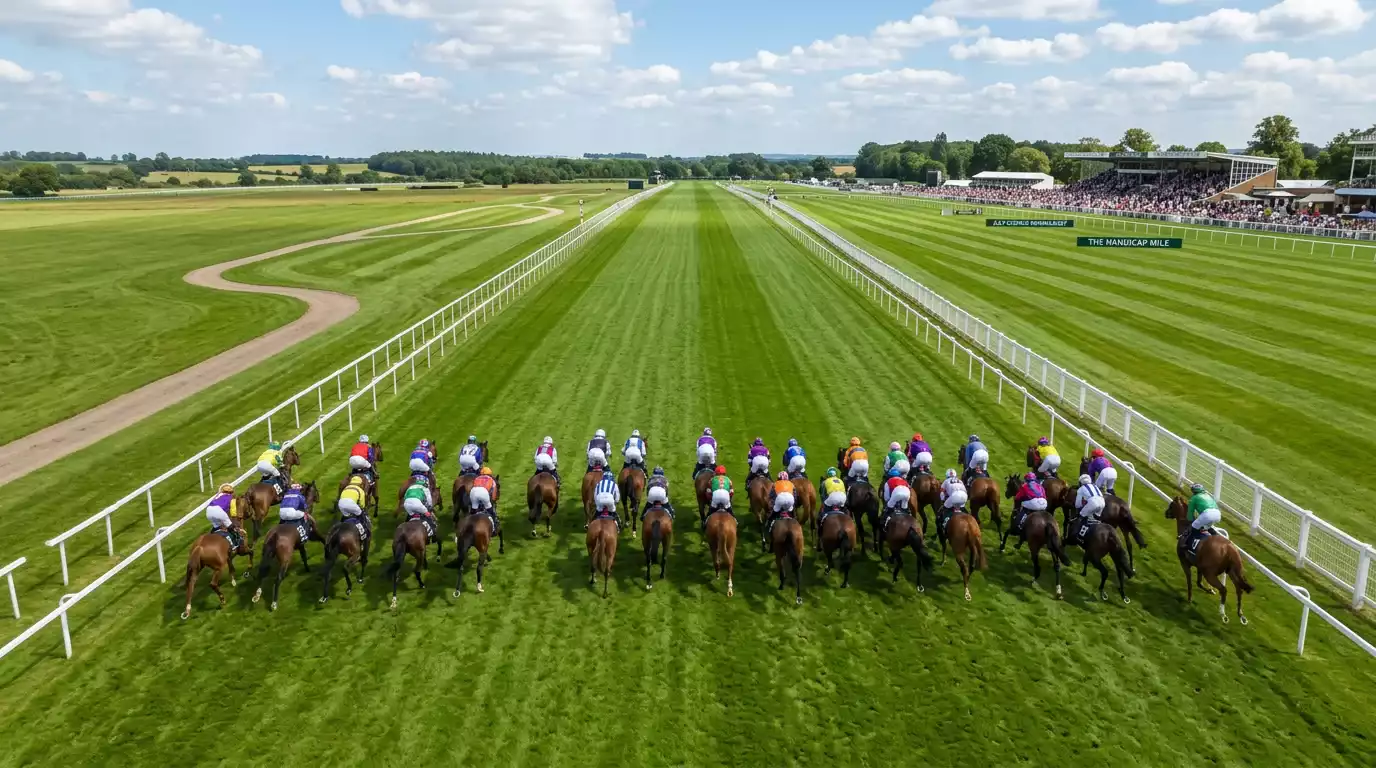
Field size is not one variable among many. It is the variable. Everything else — odds, fractions, strike rates — flows downstream from how many horses line up at the start. I have built spreadsheets tracking place bet returns across different field-size bands over thousands of races, and the pattern is unambiguous: the sweet spot for place bet value sits in the 12-to-20-runner range, where three or four places are paid and the competitive spread of the field creates genuine pricing inefficiencies.
Consider what happens at each threshold. In a four-runner race, only two positions pay out, and the odds reflect that — place prices are so compressed that the return barely justifies the risk. At five to seven runners, three places open up, but the fields are small enough that favourites dominate. When the favourite is near-certain to place, the odds offered on it are microscopic, and the odds on anything else are not much better because the field lacks depth.
The interesting territory begins at eight runners and accelerates at 16, where handicaps unlock a fourth paid place. A fourth position means you are covering 25% of the field — an enormous shift in probability. In a typical 20-runner handicap, even a horse priced at 20/1 has a realistic chance of finishing in the top four, and the place odds on mid-range selections can offer genuine value that the bookmaker has not fully priced in.
Going ground adds another layer. Favourites show a place strike rate above 50% on good going but that drops to around 20% on heavy or soft ground. Larger fields on soft ground produce the highest variance outcomes — and the most generous place odds for punters who know how to read the conditions. I track this data religiously, and the correlation between field size, going and place bet ROI is the single most useful pattern I have found in nearly a decade of analysis.
The practical takeaway is simple. Before you even look at a horse's form, check two things: how many runners are declared and what the going is. Those two data points will tell you more about the likely value of a place bet than any tipster column or racing podcast ever will.
UK Racing's £4 Billion Economy and What It Means for Bettors
Most people who bet on horses have no idea how much money flows through the sport they punt on — or why that flow matters to the odds on their screen. I did not either, for my first few years. Then I started reading HBLB annual reports and Gambling Commission statistics, and the picture that emerged fundamentally changed how I think about place markets.
British horse racing is not a niche pastime. The industry contributes over £4 billion annually to the UK economy and sustains approximately 85,000 jobs. The total gross gambling yield across all regulated gambling in the UK reached £16.8 billion in the year ending March 2025 — a 7.3% increase year-on-year — with horse racing's remote betting share accounting for £766.7 million of that total.

Those headline numbers translate directly into what you experience as a bettor. Prize money hit a record £194.7 million in 2025, up 3.5% from £188 million the previous year. Kevin Walsh, Racing Director at the Racecourse Association, put it plainly: higher prize money represents strong investment in the sport and a continued incentive for participants to field horses at British racecourses. More prize money attracts more runners. More runners mean bigger fields. Bigger fields mean more paid places and better place bet opportunities. The economics are not abstract — they are the pipeline that feeds your betting slip.
Racecourse attendance tells a similar story. In 2025, UK racecourses drew 5.031 million visitors — the first time the figure had topped five million since 2019. That recovery was not accidental. A £3 million marketing campaign called "The Going Is Good" drove a 4.8% year-on-year increase, with average attendance per fixture rising 3.6%. More bodies on course means more Tote pool liquidity, more on-course bookmaker competition, and more money circulating through the betting ecosystem.
The statutory betting levy — the mechanism by which bookmakers fund the sport — reached £108.9 million in 2024/25, the highest figure since the levy was reformed in 2017. Anne Lambert, then Interim Chair of the HBLB, described that yield as providing "additional reassurance for the Board in considering spending decisions" while noting the need for prudence given that "bookmakers' increased profits are being generated from falling turnover." That tension — rising levy from rising margins, even as the overall volume of bets declines — is the defining dynamic of UK racing economics right now, and it shapes place markets in ways I will address in the next section.
The point for place bettors is this: the sport is financially healthy enough to sustain competitive fields and generous promotions, but the underlying betting volume is under pressure. Understanding that context is not academic — it is the difference between a bettor who reacts to odds and one who understands why those odds exist.
Affordability Checks, the Black Market and Place Betting
I had a conversation with a long-time punter at Newmarket last spring that stuck with me. He told me his account had been restricted — not because of any irresponsible behaviour, but because an affordability check flagged his deposit patterns. He had been betting on racing for 30 years. His response? He opened an account with an offshore operator. "I'm not stopping," he said. "I'm just moving." His story is not unusual. It is the story of UK racing in 2025 and 2026.
Warning: Unlicensed operators are not regulated by the Gambling Commission. They offer no dispute resolution, no self-exclusion tools and no guarantee that your funds are safe. Using them also means your bets do not contribute to the betting levy that funds UK racing. If you bet with an unlicensed operator, you are betting outside the system that protects you.
The numbers behind this shift are striking. The Racing Post's Big Punting Survey in 2025, which drew roughly 10,000 respondents, found that 23.7% of bettors had been subjected to affordability checks — up from 16.6% in 2023. A third of high-rollers in that survey admitted to using unlicensed operators. Richard Wayman, Director of Racing at the BHA, was blunt about the consequences: he had no doubt that the declines in betting volume were headed by the impact of affordability checks and the extent to which they had resulted in people either stopping betting or moving to unlicensed operators.
The scale of the unlicensed market is no longer speculative. An IFHA study found that unique visits to 22 unlicensed betting sites from the UK grew by 522% between August 2021 and September 2024. Over the same period, traffic to licensed sites grew by just 49%. A BGC-commissioned study estimated the annual unlicensed betting turnover at approximately £2.7 billion, with 1.5 million British punters spending up to £4.3 billion on the black market. Brant Dunshea, Acting Chief Executive of the BHA, warned from the outset of the Gambling Act review that British racing had "repeatedly warned of the unintended consequences of well-meaning policy decisions" on the sport, including the threat of growing unlicensed market activity.
What does this mean for place bettors specifically? Three things. First, falling turnover on licensed platforms compresses bookmaker margins, which can lead to less competitive place odds and fewer generous promotions. The average turnover per race dropped 8% in 2024/25 compared with the previous year and 19% compared with 2021/22. Second, reduced betting levy contributions threaten the prize money pipeline that sustains field sizes — and as I have argued throughout this guide, field size is the foundation of place bet value. Third, the regulatory environment is still evolving. Further checks, higher taxes and new compliance requirements are all on the table, and each one has downstream effects on the odds, terms and availability of place markets.
None of this means place betting is under threat. It means the landscape is shifting, and bettors who understand the regulatory forces acting on their markets are better positioned than those who do not.
Data-Driven Place Bet Strategy: Core Principles
Here is a confession: for my first three years analysing place markets, I thought strategy meant "pick horses that look likely to place." That is not a strategy. That is a hope dressed in racing silks. A real strategy is a repeatable framework with defined inputs, measurable criteria and — crucially — a feedback loop that tells you whether it is working. What follows are the core principles I use, distilled from nine years of data and several thousand bets.
The first principle is field-size filtering. Not every race is worth betting on. I have already established that the 12-to-20-runner range offers the best structural value for place bets, so the first step before any other analysis is to eliminate races outside that window. A six-runner novice hurdle and a 25-runner Cesarewitch require entirely different approaches, and trying to apply one system across both is how bankrolls disappear. For the specific tactics that apply to races at the larger end of that spectrum, the detailed place bet strategy guide covers the quantitative framework.
The second principle is going-ground awareness. I have mentioned the data already — favourite strike rates above 50% on good ground versus around 20% on heavy — but the strategic implication goes further than favourites. On soft and heavy ground, form becomes less predictive, front-runners tire earlier, and pace collapses become more common. This increases the likelihood of unconsidered horses filling place positions, which means the odds on mid-range selections often understate their true place probability. I look for races on soft or heavy ground with 12+ runners as my highest-conviction place betting scenarios.
The third principle is favourite avoidance at short prices. The mathematics are unforgiving. A horse at 2/1 with 1/4 place terms offers place odds of 1/2. To break even at 1/2, your selections need to place 67% of the time. That is achievable for some favourites in some conditions — but only just, and the margin for error is razor-thin. I rarely back anything to place below 5/1 on the win price unless the field size, going and race type all align in its favour.
Place bet pre-race checklist
- Field size confirmed (post-withdrawal, not overnight declarations)
- Place terms verified for race type (handicap vs non-handicap) and fraction (1/4 or 1/5)
- Going ground checked against horse's proven preferences
- Win price assessed — does the implied place probability offer value against your estimate?
- Staking plan applied — no bet exceeds predetermined percentage of bankroll
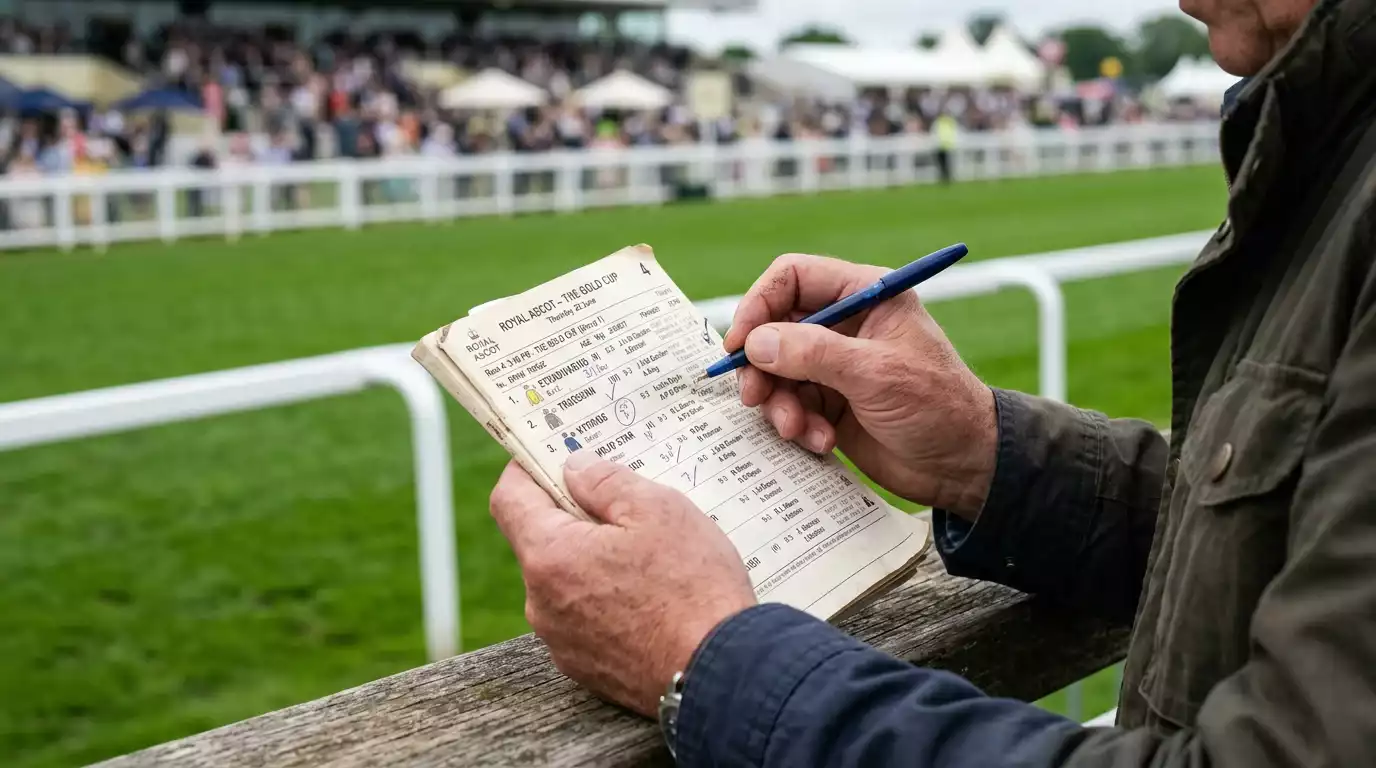
The fourth principle is value identification. This is where most guides go vague and I refuse to. A place bet has value when the true probability of a horse placing exceeds the probability implied by the place odds. If a horse's place odds are 2/1, the implied probability is 33%. If your analysis — based on field size, going, pace scenario, trainer form and course record — estimates a 40% chance of placing, that is a value bet. If it estimates 30%, it is not. The discipline is in running the numbers before every bet and walking away when they do not stack up.
The fifth principle is bankroll discipline. I use a 2% maximum stake rule — no single place bet risks more than 2% of my total betting bank. In a game where even a strong selection process produces losing runs of 10 or more bets, this rule is the difference between surviving a cold streak and rebuilding from scratch. Level staking works for most punters; proportional staking (where stake size adjusts with bankroll size) works better for those who can track it consistently.
Seasonal awareness ties everything together. Place betting participation peaks around 7% of the population during the April-to-July Flat season, dropping to around 4% in the autumn. The Flat season produces the largest fields, the most 16+ runner handicaps and the most extra-place promotions. National Hunt racing from October through April offers smaller fields and softer ground — a different environment that rewards a different approach. HBLB CEO Alan Delmonte has argued that racing needs to be "presented and structured in a way that is attractive to the modern consumer," and that restructuring will continue to reshape the seasonal calendar that place bettors navigate.
Strategy gives you a framework, but the terms your bookmaker offers determine what that framework can actually deliver — and those terms vary more than most punters realise.
Bookmaker Place Terms: What Varies in 2026
If I could change one thing about how punters approach place betting, it would be this: stop assuming all bookmakers offer the same terms. They do not. The standard Tattersalls rules provide a baseline, but licensed operators are free to offer terms more generous than that baseline — and in the current competitive landscape, many do, especially around the major festivals.
The variation is most visible on headline events. For the Grand National 2026, one major operator offered seven paid places at 1/5 odds — the most generous terms among the large licensed bookmakers for that race. Others offered six places, some at 1/4. The difference between seven places at 1/5 and six places at 1/4 changes the expected value of a place bet materially, particularly on longer-priced selections where the fractional difference compounds. At Cheltenham 2026, one operator paid out over £50 million through its Best Odds Guaranteed programme, while another paid upwards of £10 million specifically on extra-place promotions. These are not rounding errors — they are structural differences that reward punters who shop for terms the way they shop for odds.
The key variables to compare across operators are: the number of paid places on major races, the fraction applied (1/4 or 1/5), whether Best Odds Guaranteed extends to the place part of each-way bets, and whether extra-place offers can be combined with other promotions. Some operators quietly reduce the fraction when they increase the number of places, which can offset the apparent generosity. Others exclude certain race types or ante-post markets from their enhanced terms. The extra places guide breaks down these variations in full.
My approach is straightforward: I hold accounts with several licensed operators and check place terms for every race I bet on. This takes two minutes and can add 5-10% to my annual place bet returns. In a market where edges are measured in single-digit percentages, that kind of improvement is not optional — it is the baseline expectation of anyone who takes this seriously.
Place Bet Horse Racing FAQ
What is a place bet in horse racing and how does it work in the UK?
A place bet is a wager on a horse to finish within a specified number of top positions in a race, rather than to win outright. In UK racing, the number of paid places depends on the field size and race type: races with 2-4 runners typically pay two places, 5-7 runners pay three places, 8+ runners pay three places (with the fraction varying by race type), and handicaps with 16+ runners pay four places. Your payout is calculated by multiplying the win odds by the applicable fraction — either 1/4 or 1/5 — and then adding your returned stake.
How many places are paid in UK horse racing?
The standard structure pays two places in races with 2-4 runners, three places in races with 5-15 runners, and four places in handicaps with 16 or more runners. These thresholds are based on Tattersalls Committee rules. Bookmakers can offer additional places as promotions — particularly on major events like the Grand National, where some operators pay six or seven places. The number of places can also change before the race if runners withdraw, reducing the field below a threshold.
What is the difference between a place bet and an each-way bet?
A place bet is a single wager on a horse to finish in the places. An each-way bet is two bets of equal stake — one on the horse to win and one on the horse to place. An each-way bet costs twice the unit stake (a "£10 each-way" is £20 total), while a place-only bet costs just the single stake. If you only want exposure to the place finish, a place-only bet is more capital-efficient because you are not paying for the win half. If the horse wins, however, an each-way bet pays out on both parts, delivering a larger total return than a place-only bet would.
How are place bet odds calculated using 1/4 and 1/5 fractions?
Place odds are derived from the win odds by multiplying by the applicable fraction. For a horse at 10/1 with a 1/4 fraction, the place odds are 10/4 (2.5/1). With a 1/5 fraction, the same horse offers place odds of 10/5 (2/1). The fraction depends on the race type and field size: handicaps generally use 1/4, while non-handicaps with 8+ runners use 1/5. Your total payout is the stake multiplied by the place odds, plus the stake returned. The difference between 1/4 and 1/5 represents a significant gap in profit over time.
What happens to a place bet if there is a non-runner?
If your selected horse is a non-runner, your bet is voided and your stake is returned (except in ante-post markets, where non-runners result in a lost stake with no refund). If a different horse in the race is withdrawn, a Rule 4 deduction may be applied to your payout, reducing it by a percentage determined by the withdrawn horse's price. Additionally, if withdrawals reduce the field size below a place-terms threshold — for example, from 16 to 14 runners in a handicap — the number of paid places may be reduced from four to three.
What are enhanced or extra places and when do bookmakers offer them?
Enhanced or extra places are promotions where a bookmaker pays out on more finishing positions than the standard terms require. For instance, standard terms on the Grand National might pay four places, but a bookmaker offering extra places might pay six or seven. These offers are most common around major festivals — Cheltenham, Aintree, Royal Ascot — and on selected big-field handicaps throughout the season. The catch is that some operators reduce the fraction (from 1/4 to 1/5) when increasing the number of places, which can partially offset the benefit. Always check both the number of places and the fraction before treating an extra-places offer as automatically valuable.
How does a dead heat affect a place bet payout?
A dead heat occurs when two or more horses cannot be separated for a finishing position. If your horse dead-heats for a qualifying place position, your payout is divided by the number of horses sharing that position. In a two-way dead heat, your place bet pays out at half the normal rate — effectively, half your stake wins at full place odds and the other half loses. In a three-way dead heat, you receive one-third of the normal payout. Dead heats most commonly affect the last qualifying position (for example, two horses tied for third in a three-place race), making it an edge case that is uncommon but worth understanding.
Created by the ”Place bet Horse Racing” editorial team.